
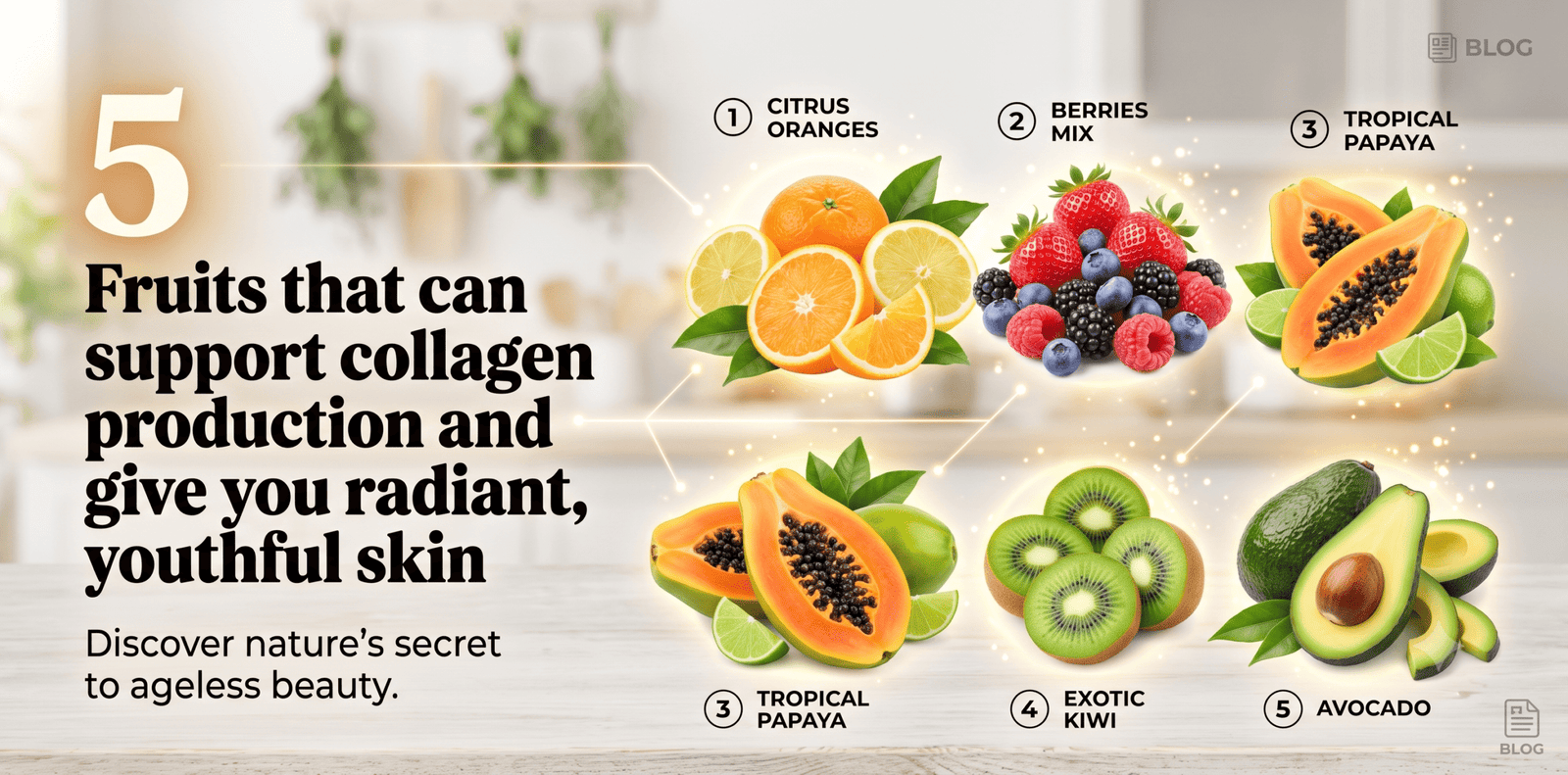
5 Fruits That Can Support Collagen Production and Give You Radiant, Youthful Skin
5 Fruits That Can Support Collagen Production and Give You Radiant, Youthful Skin
Every skincare aisle is flooded with collagen-infused creams, serums, and masks promising to rewind the clock. However, a biological reality often gets overlooked: collagen molecules applied topically are generally too large to penetrate past the skin’s surface barrier into the deeper dermis where natural elasticity is built.
If you want firmer, plumper, and genuinely luminous skin, the real transformation happens from the inside out.
Collagen is the primary structural protein in your connective tissues, responsible for keeping your skin firm, supple, and wrinkle-resistant. Starting in your mid-20s, natural collagen synthesis declines by roughly 1% per year. Environmental stressors—such as ultraviolet (UV) radiation, oxidative stress, and chronic inflammation—accelerate this breakdown.
While plant foods do not contain animal collagen directly, they provide the exact biochemical building blocks—especially Vitamin C, zinc, copper, and key antioxidants—that your fibroblasts need to synthesize new collagen fibers and protect existing ones from enzymatic degradation.
Adding these five powerhouse fruits to your daily diet will jumpstart your body’s natural collagen factory.
1. Citrus Fruits: The Essential Vitamin C Catalyst
Oranges, lemons, grapefruits, and limes are legendary in skincare for good reason. They are nature’s most accessible source of pure ascorbic acid (Vitamin C).
From a biochemical standpoint, collagen synthesis is impossible without Vitamin C. It serves as an indispensable co-factor for two critical enzymes: prolyl hydroxylase and lysyl hydroxylase. These enzymes stabilize and cross-link the triple-helix structure of pro-collagen, transforming loose amino acids into durable, tensile collagen fibers. Without sufficient Vitamin C, your body cannot knit these protein chains together.
Beyond synthesis, citrus fruits contain hesperidin and naringenin, bioflavonoids that neutralize free radicals generated by sunlight and pollution before they can trigger collagen-eating enzymes known as matrix metalloproteinases (MMPs).
How to consume: Squeeze fresh lemon juice into warm water every morning, or snack on whole oranges rather than commercial juices to keep the blood sugar spike low and retain beneficial dietary fiber.
2. Berries: The Antioxidant Shield Against Collagen Breakdown
Whether it’s strawberries, blackberries, raspberries, or blueberries, berries are nutrient-dense powerhouses designed to defend your dermis. Strawberries, in particular, pack more Vitamin C per serving than oranges.
The true secret weapon in dark-colored berries is their concentration of anthocyanins and ellagic acid. Ellagic acid has been clinically shown to prevent the breakdown of collagen caused by UV-B light exposure. It halts the inflammatory cascade that weakens skin architecture, helping prevent fine lines, photoaging, and sagging.
Furthermore, berries possess one of the highest ORAC (Oxygen Radical Absorbance Capacity) values in the plant kingdom, actively mopping up oxidative stress that dulls your complexion.
How to consume: Toss a cup of mixed organic berries into your morning oatmeal, blend them into a daily protein smoothie, or pair them with raw walnuts for an anti-inflammatory afternoon snack.
3. Papaya: The Enzyme-Powered Skin Renovator
Papaya is a tropical gem loaded with bioavailable Vitamin C, Vitamin A, potassium, and magnesium. However, what makes papaya uniquely suited for youthful, glowing skin is an enzyme called papain.
Papain works as a natural digestive enzyme that helps your gut break down complex dietary proteins into individual amino acids, such as glycine and proline—the precise building blocks required to build human collagen.
Papaya is also rich in lycopene, a potent carotenoid that acts as internal photoprotection. Regular consumption of lycopene-rich fruits helps defend cellular DNA against sun-induced redness and micro-damage, reinforcing the skin barrier and giving your face a healthy, warm glow.
How to consume: Enjoy diced fresh papaya with a drizzle of lime juice, or incorporate it into a refreshing tropical salsa with diced cucumber, cilantro, and red onion.
4. Kiwi: The Overlooked Vitamin C Heavyweight
When people think of Vitamin C, kiwi rarely tops the list—yet gram for gram, green and golden kiwis contain nearly double the Vitamin C content of an orange. A single medium kiwi easily covers your entire daily recommended intake.
Kiwis also deliver a rare balance of Vitamin E alongside Vitamin C. These two antioxidants work synergistically: Vitamin C acts in the water-soluble compartments of the cell, while Vitamin E protects the lipid-rich cell membranes. Together, they form an impenetrable antioxidant defense system that prevents lipid peroxidation and keeps dermal matrix fibers intact.
Additionally, the seeds of kiwi contain trace amounts of omega-3 fatty acids, which keep the skin mantle hydrated, supple, and plump.
How to consume: Wash the skin thoroughly and slice the entire fruit—eating the thin skin delivers extra fiber and concentrated polyphenols—or scoop out the vibrant flesh as a post-lunch digestive aid.
5. Avocado: Monounsaturated Fats and Skin Sterols
Technically a single-seeded berry, the avocado brings a completely different set of collagen-supporting benefits to your plate.
While water-soluble vitamins stimulate collagen production, fat-soluble nutrients ensure that the collagen matrix remains hydrated and flexible. Avocados are rich in oleic acid, a heart-healthy monounsaturated fatty acid that keeps cell membranes permeable and moisture locked inside the dermis.
Avocados also contain plant sterols called sterolins. Research indicates that sterolins penetrate deeply to soften skin and reduce the appearance of age spots while encouraging dermal metabolism. Paired with significant levels of Vitamin E, carotenoids (lutein and zeaxanthin), and copper—a trace mineral essential for the final maturation of collagen fibers—avocados are unmatched for restoring a dry, crepey skin texture.
How to consume: Mash half an avocado onto whole-grain sourdough with hemp seeds, slice it over your daily salad, or blend it into smoothies for a rich, creamy consistency.
Maximizing Your Results: The Inside-Out Strategy
Eating these fruits creates the optimal biological environment for skin regeneration, but diet works best as part of an integrated lifestyle approach:
Pair fruits with amino acid sources: Your body needs raw amino acids (proline, glycine, and hydroxyproline) along with Vitamin C to assemble collagen fibers. Combine your fruit intake with eggs, tofu, Greek yogurt, bone broth, or clean plant proteins.
Cut refined sugars: High sugar intake leads to glycation, a process where excess glucose molecules attach to collagen fibers, making them brittle, stiff, and prone to snapping.
Stay hydrated: Water acts as the transport medium that carries these micronutrients directly to your dermal capillary beds.
Radiant, resilient skin isn’t manufactured in a laboratory jar—it is nourished at the cellular level. By making these five nutrient-dense fruits a daily dietary staple, you give your skin the exact raw materials it needs to repair, rebuild, and naturally glow for years to come.